wellness
Seoul's Ancient Fermented Foods Boost Gut Health, Science Confirms
Seoul's centuries-old fermentation tradition turns out to be one of the most effective gut-health strategies modern science keeps confirming.
How we reported this
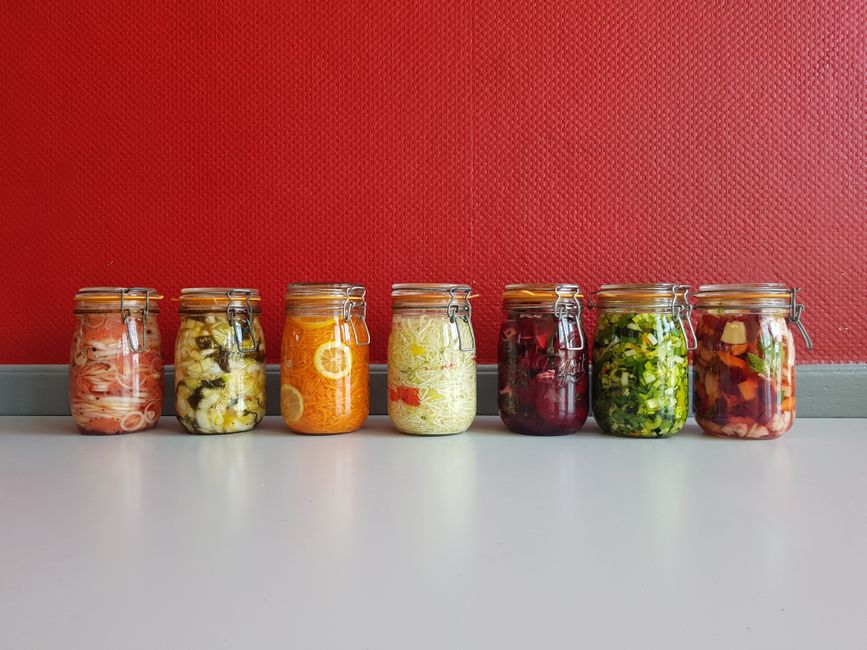
Korea ferments everything. Cabbage, radishes, soybean paste, fish, grain, if something grows here, someone has buried it in a crock at some point in the last two thousand years. Researchers at Stanford University published findings in 2021 showing that a diet high in fermented foods increases microbiome diversity and reduces inflammatory markers within just ten weeks. Seoul residents, it turns out, have been running that experiment on themselves for generations without needing a clinical trial.
Interest in the gut-brain connection has accelerated sharply this year, partly because the broader hormone-and-longevity conversation has gone mainstream. As more people scrutinise what they put into their bodies, rethinking everything from testosterone supplements to melatonin, fermented whole foods have re-emerged as a foundational, low-cost option with decades of scientific backing. In Seoul, that conversation carries particular weight because the raw ingredients are already embedded in the daily food supply.
Where to Start: Mapo-gu to Gwangjang Market
Gwangjang Market in Jongno-gu remains the single most practical place to begin an education in Korean fermentation. The covered arcade running off Jongno 5-ga hosts stall after stall of freshly prepared kimchi, with vendors selling by the kilogram starting around 8,000 won for baechu kimchi, the standard napa-cabbage version, as of early July 2026. The market also stocks kkakdugi (cubed radish kimchi) and oi sobagi (stuffed cucumber kimchi), both of which ferment faster and have a sharper, brighter flavour profile that many first-timers find more approachable than the aged baechu variety.
For doenjang, the fermented soybean paste that functions as Korea's answer to Japanese miso, the neighbourhood of Mapo-gu has seen a cluster of artisan producers set up retail operations over the past three years. Sunchang Gochujang Village may be a four-hour bus ride to North Jeolla Province, but Seoul's Mapo Traditional Market stocks certified Sunchang-origin pastes, clearly labelled by fermentation period, anything marked 2년 숙성 (two-year aged) will have a noticeably deeper umami character and a higher concentration of beneficial Bacillus subtilis bacteria than mass-produced equivalents.
Makgeolli, the lightly sparkling, milky rice wine, deserves a paragraph of its own. It is technically a fermented food, not merely an alcoholic beverage: unpasteurised versions contain live Lactobacillus cultures at concentrations that rival commercial probiotic supplements. Bars along Mapo-daero and the lane streets of Hapjeong serve draft makgeolli from local producers including Seoul Takju, which bottles its product without heat treatment specifically to preserve the live culture count. A half-litre carafe runs between 6,000 and 9,000 won at most Hapjeong venues.
Reading the Labels and Building a Routine
Not all fermented products on Seoul supermarket shelves are created equal. CJ Haechandle and Daesang's Chongga brand both produce widely available kimchi, but pasteurisation, applied to extend shelf life, kills the live bacteria that generate most of the gut-health benefit. At Emart and Homeplus branches across the city, look for the phrase 생김치 (saeng kimchi, or raw kimchi) or check that the container is vented, a sign the product is still actively fermenting. Refrigerated sections near the store's Korean food aisle typically stock both pasteurised and live options side by side.
The Korea Food Research Institute, based in Wanju but with published guidance widely circulated through Seoul Public Health Centers (보건소), recommends incorporating at least one fermented food into two meals daily for measurable microbiome benefit. That is less demanding than it sounds in Seoul, a bowl of doenjang jjigae at breakfast and a side of kimchi at dinner already satisfies the target without any special effort or supplementation.
For anyone wanting a more structured approach, the Seoul Metropolitan Government's Healthy Seoul program, run through district-level community health centres, periodically offers free fermentation workshops, with Mapo-gu and Seongdong-gu branches historically running sessions in autumn when kimchi-making season begins. Registration opens through the Seoul e-Health portal, usually in September. Until then, Gwangjang Market and your nearest 보건소 are a reasonable starting point, and considerably cheaper than a probiotic subscription.